

We are sitting in a theater where the decorations are our Universe. We clap our hands, cheering for our discoveries, while the curtain hasn't even started to open yet.
The Scale of the Observed
How big do you think our Universe is?
How many galaxies, planets, and stars? 100 billion? 200?
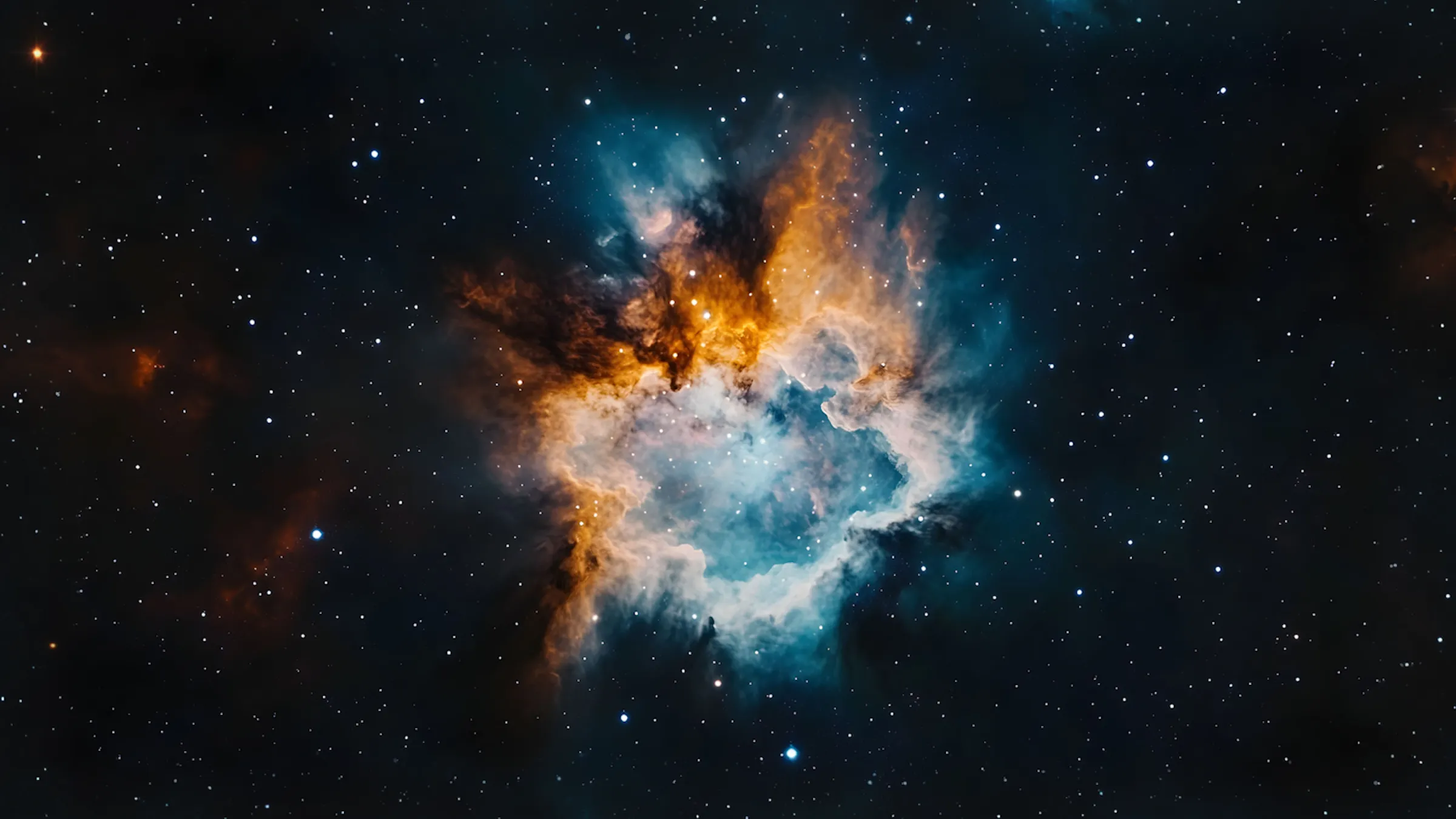
While recent data from the James Webb Space Telescope continues to refine our view, current cosmological models estimate up to 2 trillion galaxies in the observable Universe.
And that’s just the observable Universe.
What about the "unobservable" one?
Calculations based on specific mathematical models suggest that the entire Universe could be at least 250 times larger than the area visible to us. Or perhaps... it is infinite.
The Physical Ceiling
The problem is not just the distance, but the laws of physics itself.
Due to the accelerated expansion of the universe, 94% of the galaxies we see in telescopes right now are already physically unreachable for us forever.
What's more, our understanding of the Universe’s composition is limited to "normal matter" — the stuff we can actually see, touch, and measure. This makes up only about 5% of everything.
The other 95% (Dark Matter and Dark Energy) remains a mystery. We know it exists through its gravitational effects, but we still lack the technology to observe its nature directly.
The Myth of Uniqueness
When I hear talk about human "uniqueness" or the search for "life in the Universe", I have only one question: which Universe are we talking about?
To be clear, this doesn’t mean the scientific search itself is "egocentrism". It is built on verifiable criteria like biochemistry, spectral signatures, and radio signals — the most precise tools we currently have.
But even so, we define the criteria for intelligence based on our own biological limits and the technology we happen to have. The fact that we haven't found "others" yet likely points to our own inability to perceive them, rather than our exclusivity.
To think we are the "center" or the "only ones" among trillions of galaxies is not a scientific conclusion — it is a lack of imagination.
The Trap of "Quick Wins"
Modern space exploration exists in a state of tension.
On one side, we have high-profile missions driven by media visibility and viral PR.
On the other, there is fundamental science — a quiet, decades-long process that rarely makes the front page.
The issue is that loud sensations sell better than years of hard work and dry numbers.
Fundamental science hasn't disappeared. It has simply become less visible.
When priorities shift, this "boring" deep research is often the first to be sidelined. But without it, we are merely chasing "quick wins" instead of truly advancing our understanding of the cosmos.
The Need for Scientific Rigor
Accepting our real scale isn’t about being negative — it’s just the only way to start seeing the world clearly.
To move forward, we must remove the "ego" from our equations and look at the cosmos with a "cold head".
We must admit that our current technology is primitive compared to the scales we are trying to measure.
We need sober experiments and long-term investment in basic science, not just a hunt for clickbait headlines about UFOs.
I want to believe that someday we will realize this, but... it is hard to believe.