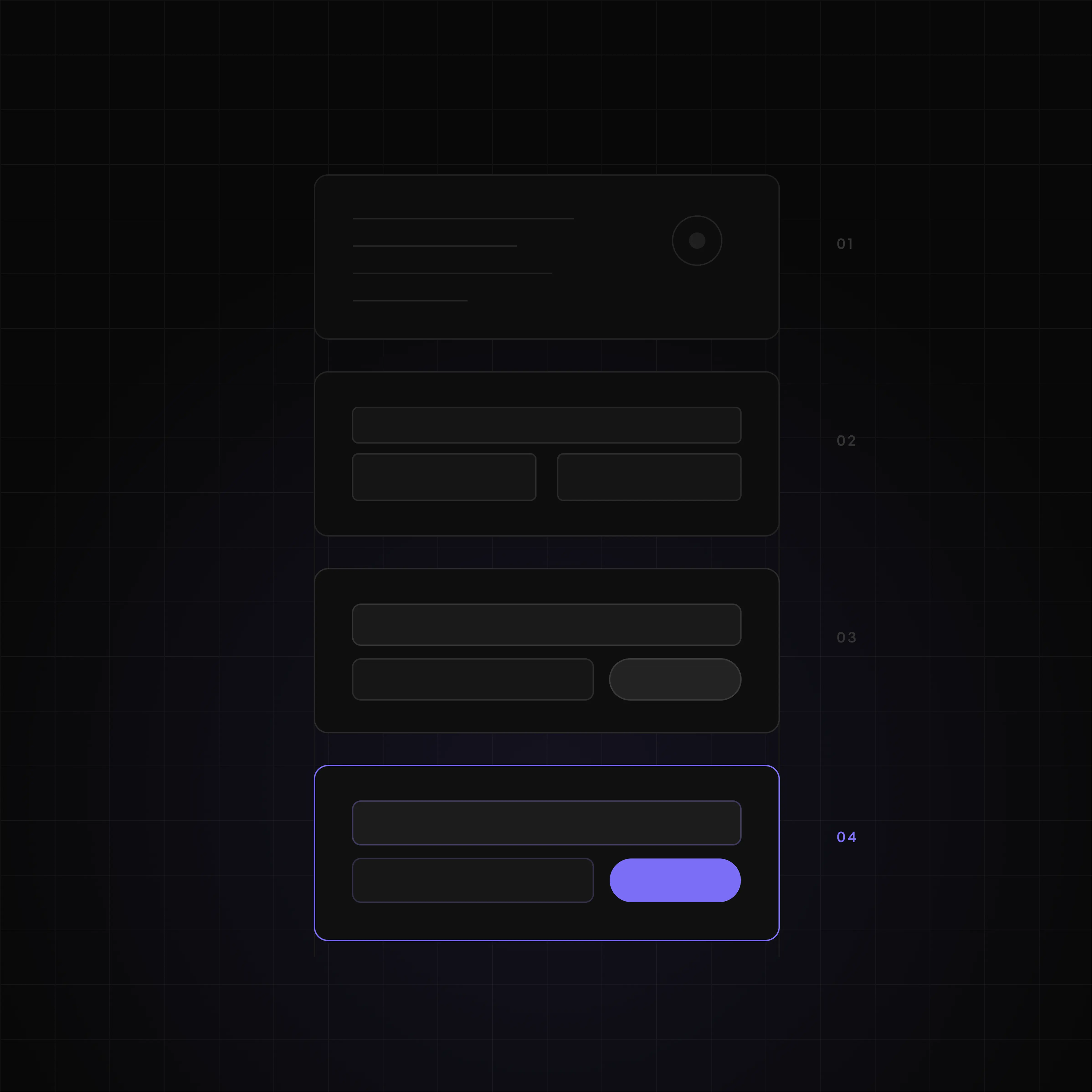

Every project moves through four stages in the same order. The timeline shifts. The sequence doesn't.
Research & Direction
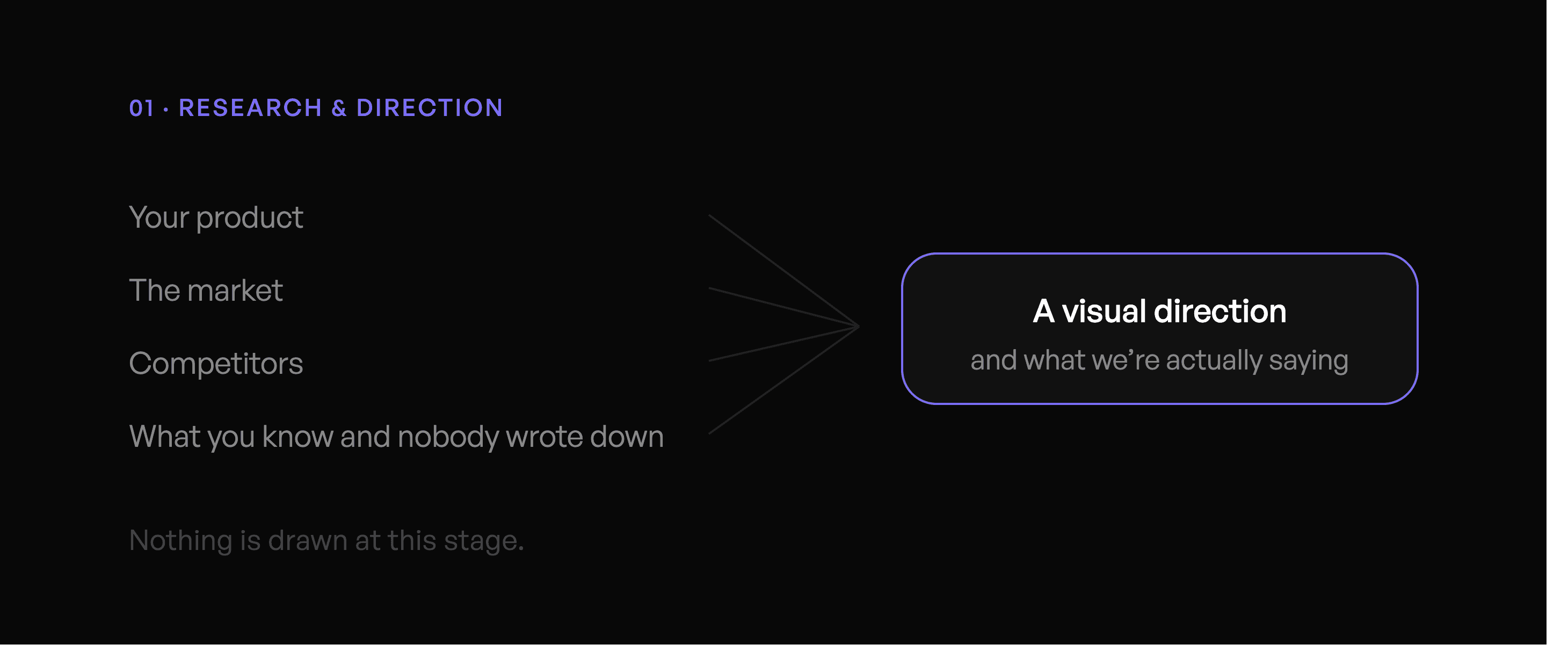
We go through the product, the market and the competitors, find what you're actually strong at and settle on a visual direction.
Nothing gets drawn yet.
This is where what you know about your product is worth the most.
You know things about your market that aren't in any research: why one customer bought and another walked, what people ask on demos, which objection comes up every single time.
All of it goes straight into the decisions here.
The more you put in at this stage, the more precise everything after it gets.
Structure & Wireframes
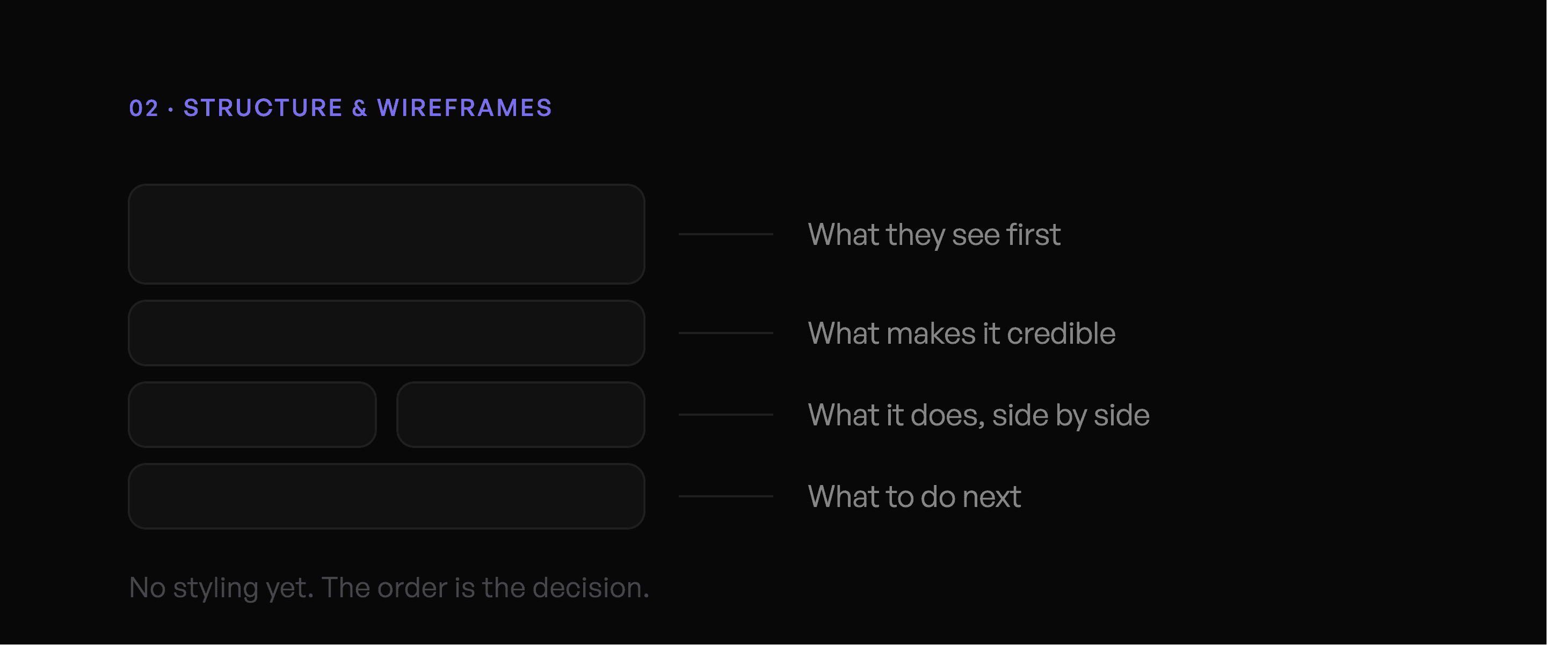
Page architecture and wireframes.
The order of the blocks affects the outcome more than the styling does. With no visuals on top, the logic is bare and easy to move around.
Good moment to say "our people read this in a different order" or "this section needs to come first". At this stage that kind of change takes minutes.
Visual Design & Build
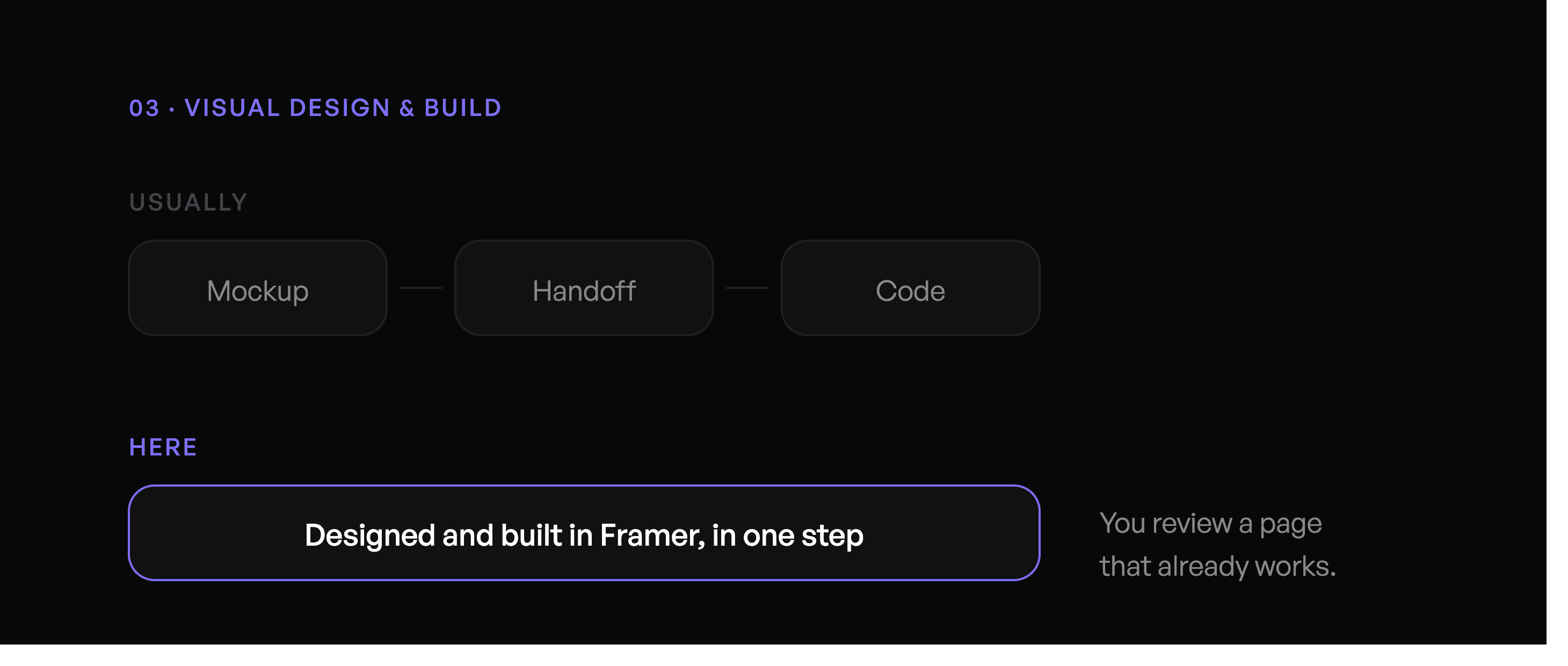
The design gets built directly in Framer. Not a mockup that someone codes later.
What you're looking at already works. You can click it, scroll it, open it on your phone, send it to your team. Feedback happens on a live page instead of a picture of one.
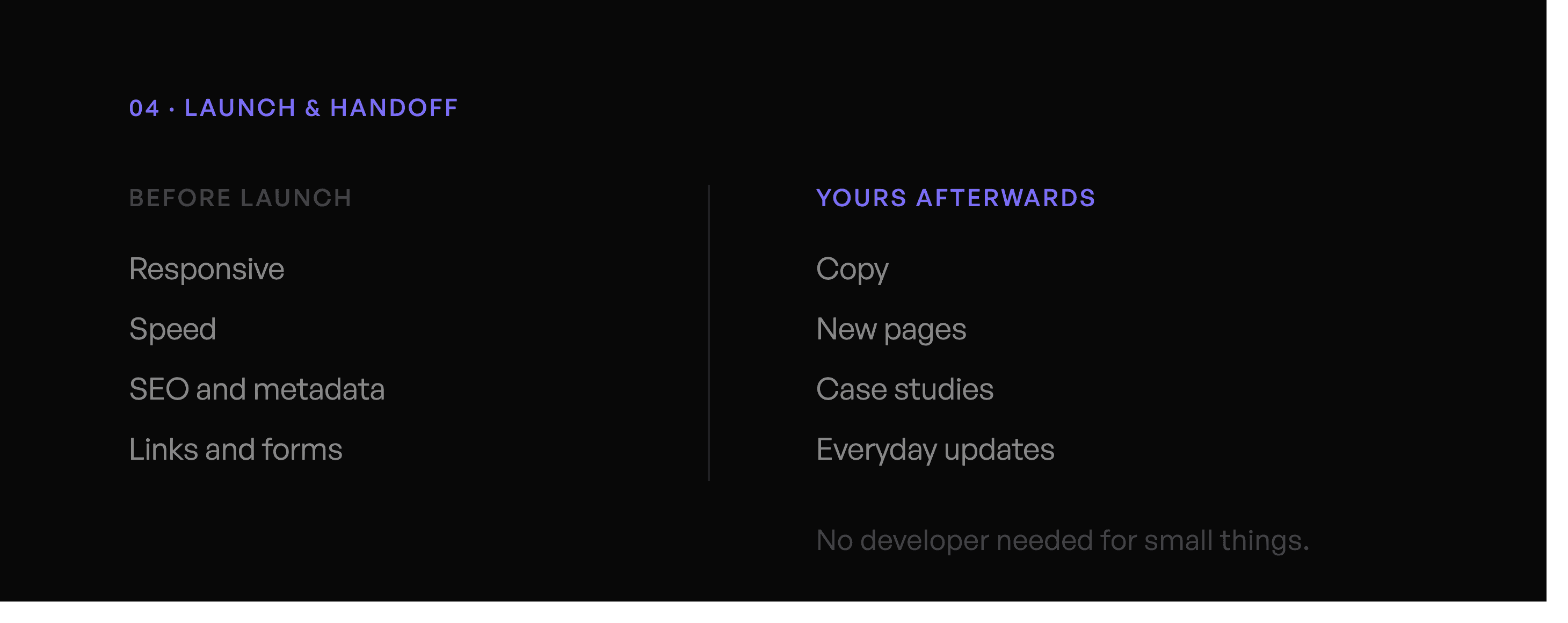
Launch & Handoff
Pre-launch checks and handoff.
You get a project you can run yourself: change copy, add pages, update case studies. No waiting on a developer for small things.
Where the time actually goes
Revisions.
They're part of the process and they're accounted for. But it helps to know where they come from.
You have a team, investors, partners. While the page doesn't exist yet, it's hard to talk about. The moment it becomes real, everyone has an opinion, and they should — they see the product from angles you don't.
So the simplest lever you have on timeline: bring those people in during the first two stages. Not at the end when everything is built, but while we're choosing direction and structure.
A change on a wireframe takes fifteen minutes. The same change after the build can cost days.
Timelines vary. A landing page and a twelve page site don't move at the same speed.
The order doesn't change.
Know the order and you know where your voice counts the most.
